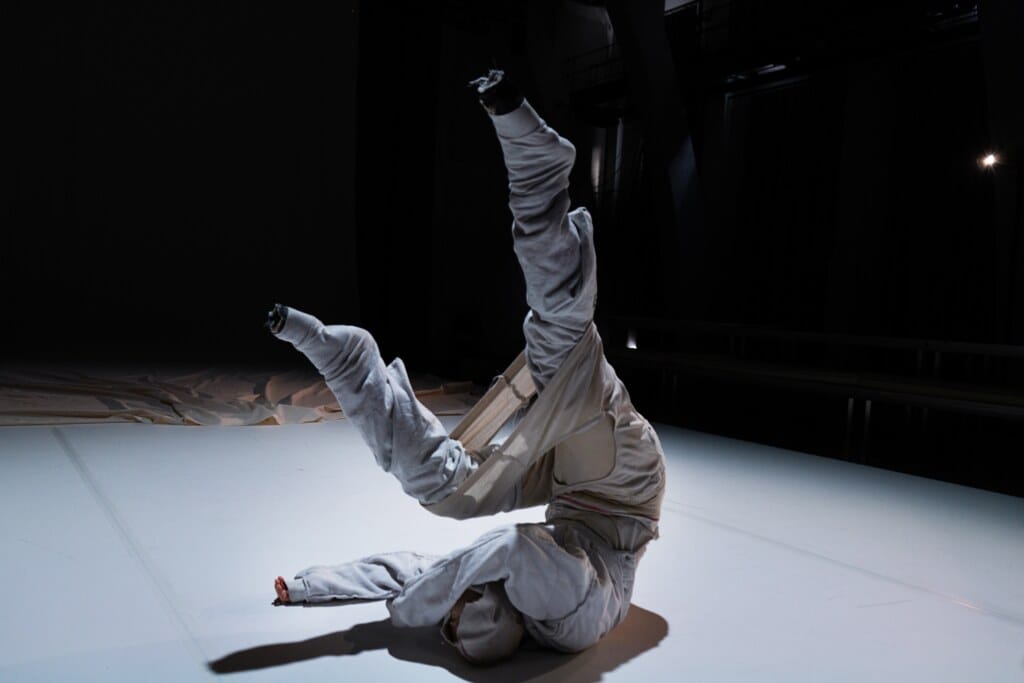
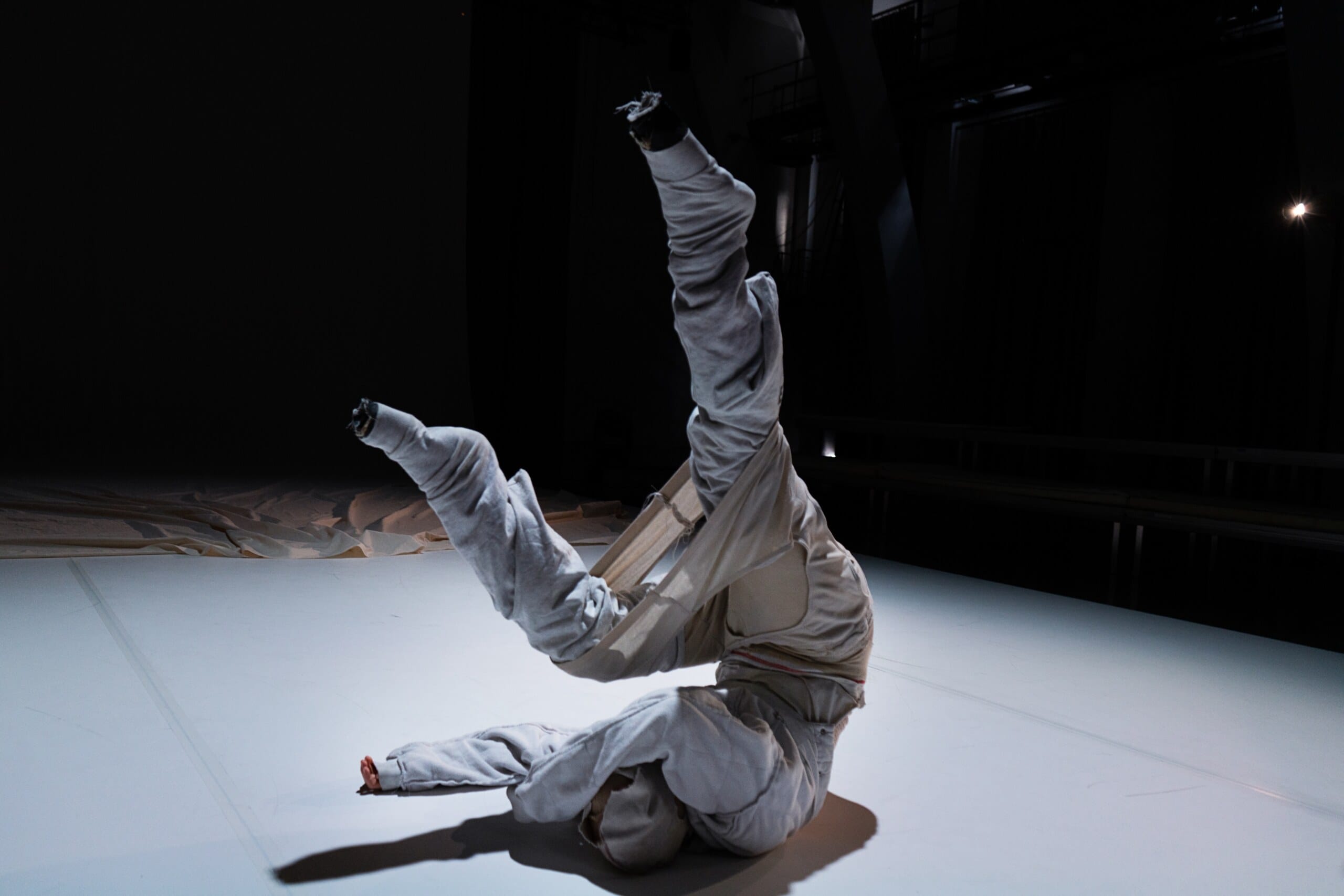
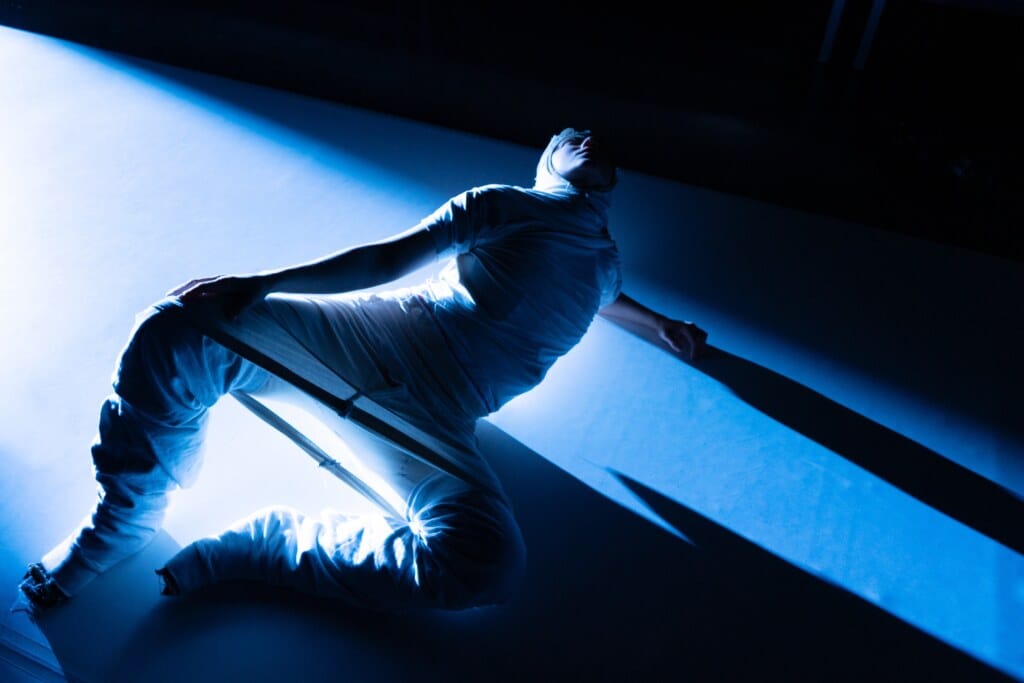
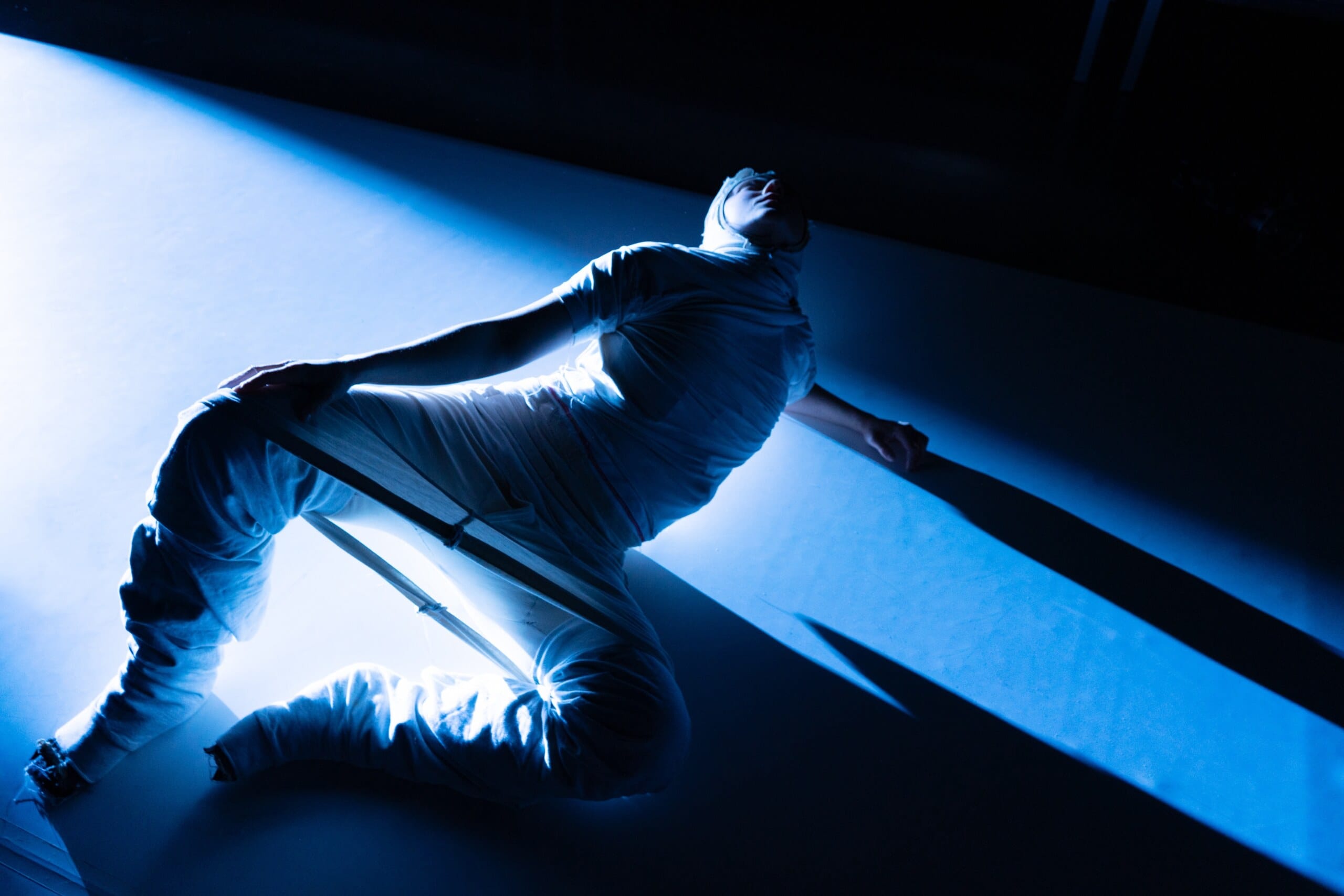
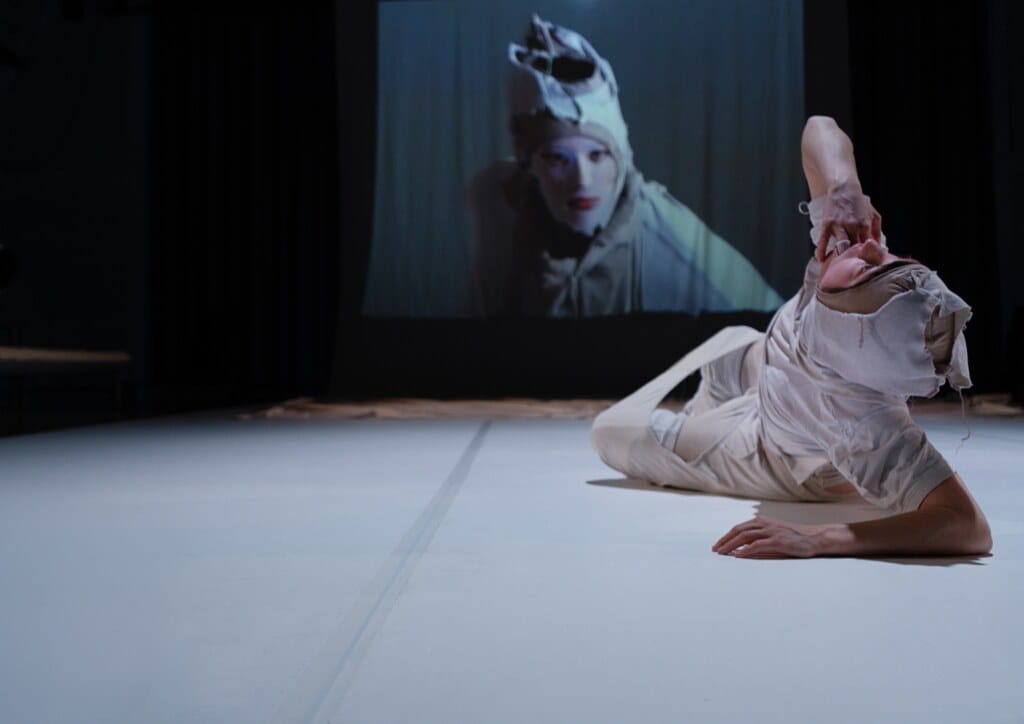
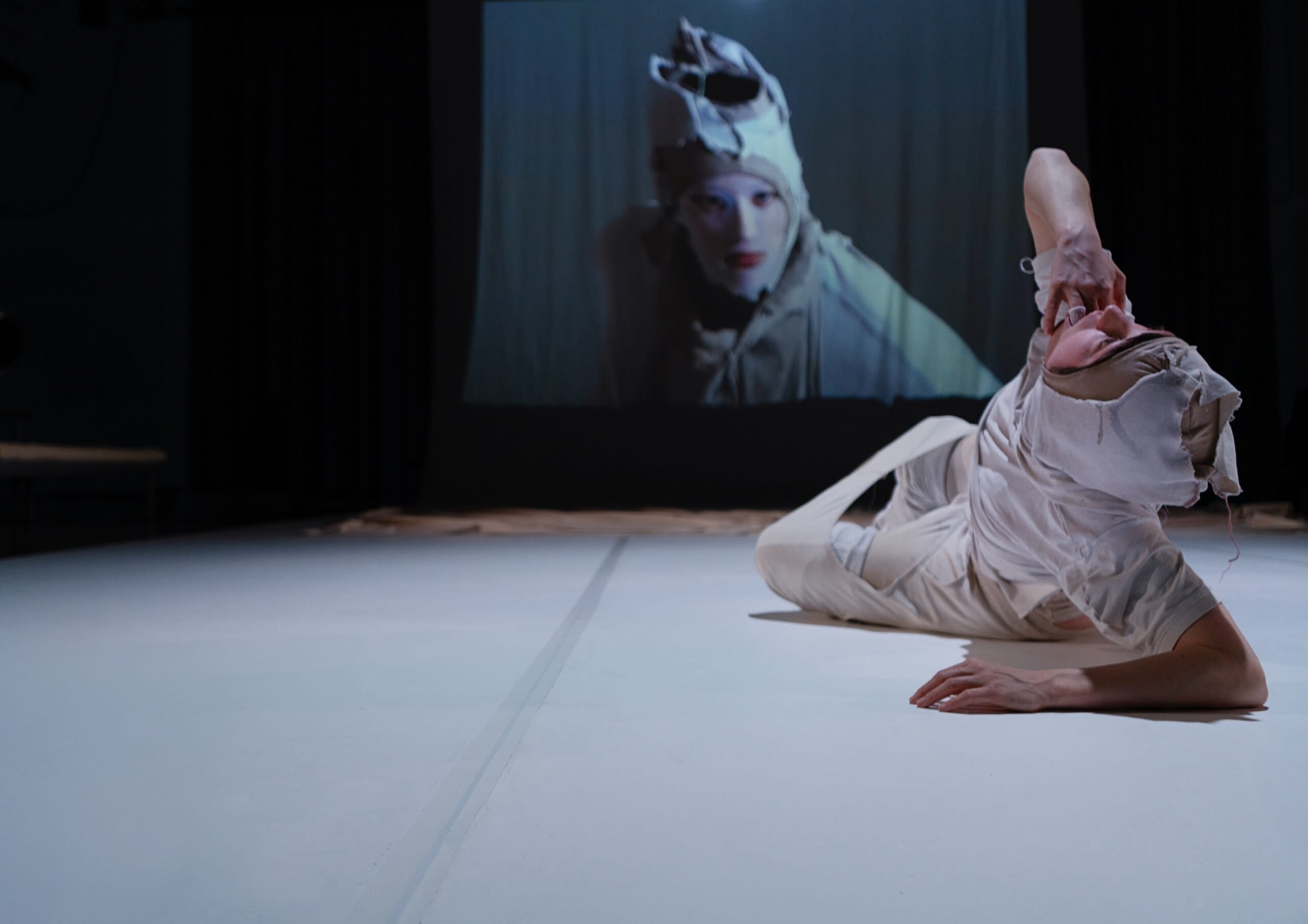
shivr is a being of the twilight. Neither nor. Both and. Living between the realms of the ill and the well. shivr is undying ongoingly. A crack in your porcelain politics.
shivr [gyse, gåsehud] is a body horror dance solo by choreographer Ar Utke Ács. The piece portrays the fictional character shivr, built like a mosaic of lived experience. Through shivr the performance investigates the chronically ill body as a non-binary position and a world departing from a queer, sick body, rather than a abled/pre-disabled body-mind. shivr sheds light on unapparent aspects of an ill dancing body and the process of coming to a voice through embodiment rather than didactics. The performance uses body horror as an expression of the chronically ill experience, where the fear and horror is not a response to “the other” but rather to the transformations happening within ones own body. shivr claims the complexity of embodying both and, neither nor, in one single body: neither ill nor well, both monstrous and scream queen, neither perpetrator nor victim, both dissociation and euphoria, neither desire nor disgust.
shivr is the first performance of the unapparent trilogy which portrays non-binary positions from the queer and chronically ill body. Each performance represents a character, an archetype, and each proposes another body-mind and thus another worlding.
Artist talk April 27 / After the performance April 27 the choreographer and performer Ar Utke Ács will be in a dialogue with artist Ruby Nilsson.
THE ARTISTIC TEAM
Choreographer and performer Ar Utke Ács
Ar Utke Ács is working as an artist within contemporary dance and an expanded understanding of choreography. They work with the poetics and politics of the body in the seams of performance, dramaturgy, text, installation, social choreographies and the imaginary. In particular, they are busy with counter-hegemonic strategies and organising from queer and crip writing and lived experience.
They are based in Copenhagen and Stockholm, hold a BA in Dance Performance from Stockholm University of the Arts and are a part of the studio cooperatives Dance Cooperative and höjden studios (SE).
Ar has co-produced works in collaboration with Dansehallerne, MDT (SE) and BIT Teatergarasjen (NO) and presented their work at contexts such as BalticCircle (FI), Open Out/Tromsø Kunstforening (NO), Index Art Foundation (SE) and Charlottenborg. More info here.
Fryd Frydendahl
Fryd Frydendahl b. 1984 Danish visual artist and photographer who divides her practice between Hvide Sande and Copenhagen. Frydendahl graduated from Fatamorgana in 2006 and received an advanced certificate from The International Center of Photography in 2009. Frydendahl has published several books and has exhibited widely, including solo exhibitions at V1 Gallery, Politikens Galleri and Baxter Street Gallery at The Camera Club New York. She has received grants from, among others, Fogtdals Rejsestipendium, The Henry Margolis Foundation and Josephine Merit Scholarship, the Danish Arts Foundation and in 2024 she received an artist grant from the Ny Carlsberg Foundation. Frydendahl is represented by V1 Gallery in Copenhagen and LINKDETAILS in Stockholm. Selected works are included in the collections of the Statens Museum for Kunst, the National Photo Collection, the Royal Library, Kunstmuseum Brandts and the Ny Carlsberg Foundation. Frydendahl is currently the headmaster at Fatamorgana, Denmark’s School of Photography.
Sofie Winther
Sofie Winther (b. 1991) is an interdisciplinary artist whose work spans sculpture, installation, performance and video. Drawing on personal experiences as a mother and her fascination with themes of kinship, labour and power she blends traditional craftsmanship with innovative technologies. Winther’s practice challenges conventional boundaries between art and function, creating works that provoke dialogue about our societal structures and global consumption.
Puer Parasitus, founded in 2021 by Sofie Winther (b.1991), is a project at the crossroads of fashion and sculpture, emerging from an intuitive, three-dimensional approach to textile materials and recycled objects. It challenges conventional boundaries by deconstructing and reconstructing everyday items into immersive works that question consumption, empowerment and the roles of gender and power in society.