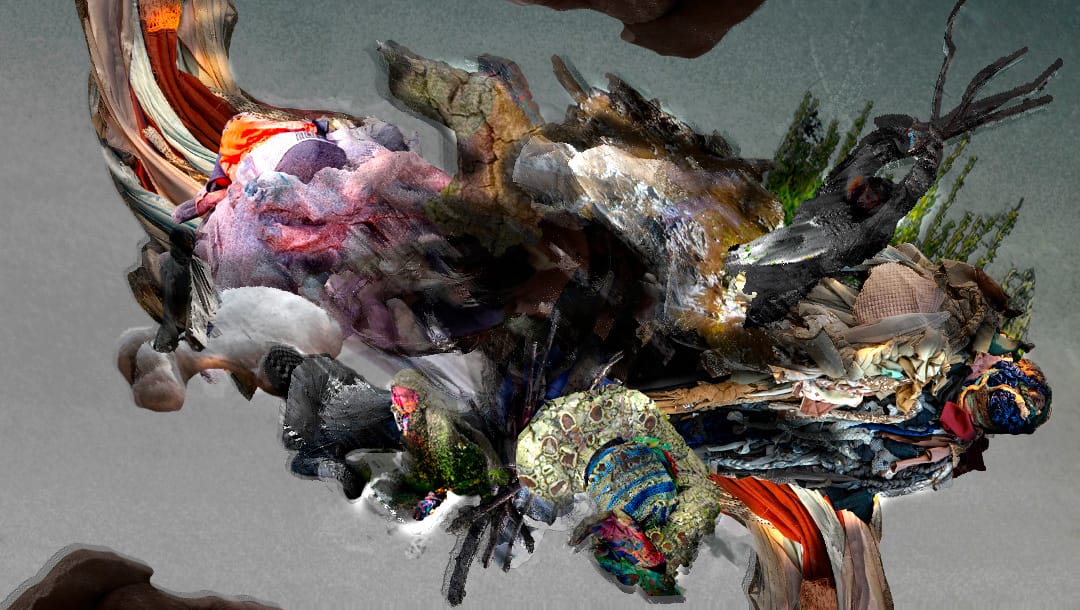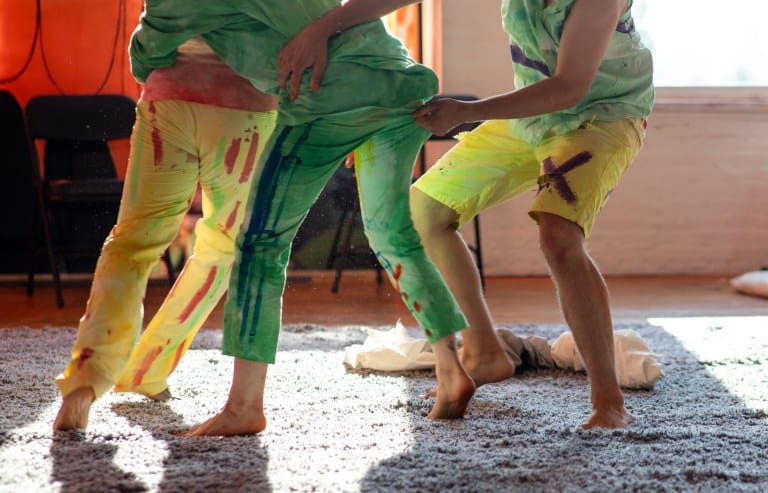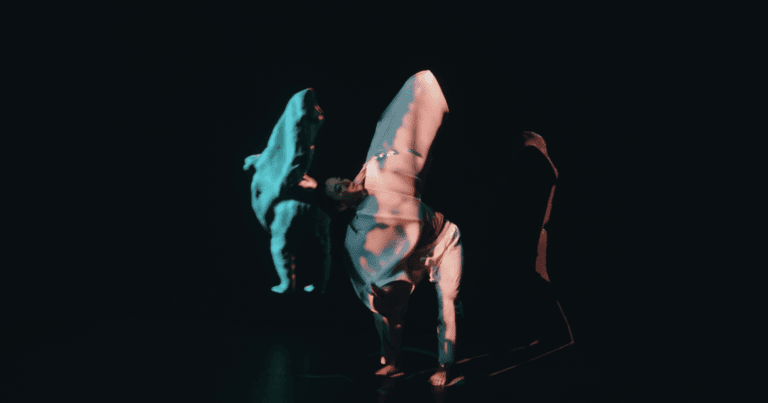
In TERRA UMBRAE (Earth Shadows), a living landscape of bodies, live sound, and memory unfolds as eight performers and one musician navigate the imprints that places leave within us.
Using the body as a medium, our beautiful space Hallen is filled with shadows of the past that, through memory, closeness, and intimacy, explore the depths of our inner landscapes. TERRA UMBRAE is a sensory journey into our shared memory.
In TERRA UMBRAE (Earth Shadows), a living landscape of bodies, live sound, and memory unfolds as eight performers and a musician navigate the imprints that places leave within us. Using the body as a medium, the great hall of Kedelhuset fills with shadows from the past that, through memory, closeness, and intimacy, explore the depths of our inner landscapes. TERRA UMBRAE is a journey into our shared memory.
TERRA UMBRAE is a choreographic landscape of shadows created by The Institute of Interconnected Realities (I-IR). The work draws on four years of work with Danish landscapes – from protected forests to urban wilderness – which here reemerge as shadows, echoes, and living memories in the bodies of ten dancers, in sound, and in scenography.
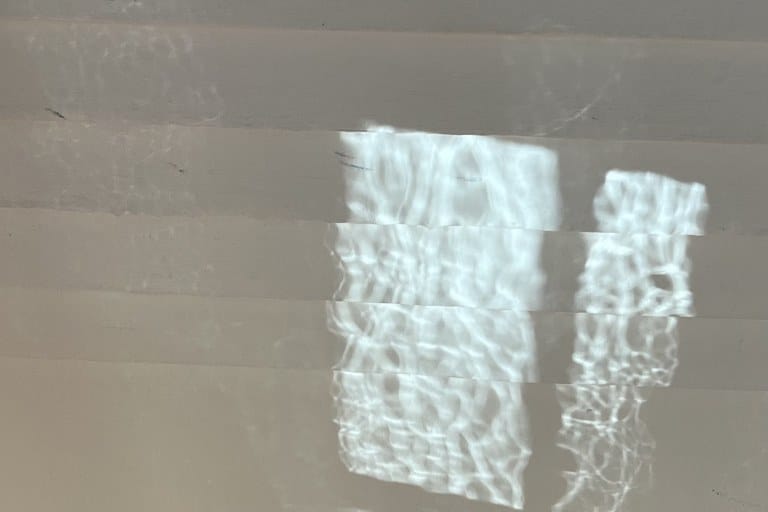
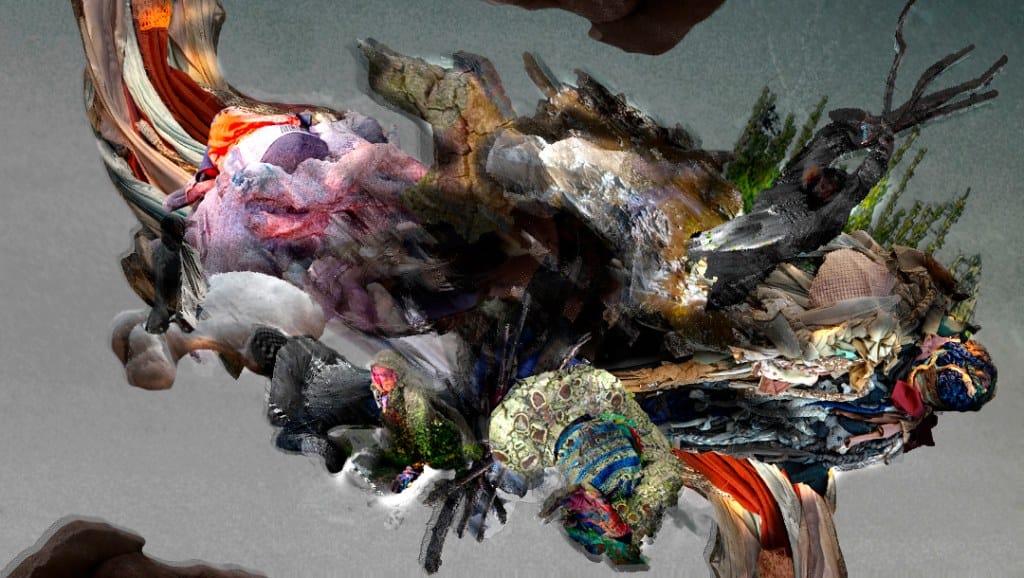
The title means “earth shadows” and in Latin also carries nuances such as pigment, echo, and memory. The performance explores how the landscapes we form connections with continue to live within us as elastic imprints that shape how we sense, remember, and move through the world.
TERRA UMBRAE conveys the bond between body and land – both layered and filled with traces and memories – and opens up a sensory experience where shadows guide us through a terrain between presence and absence.
About I-IR
Institute of Interconnected Realities (I-IR) is an artistic research and production company working with choreographic thinking across formats and contexts. The company’s practice is inspired by the ecologically grounded concept of Decentralized Choreography, which describes a choreographic event unfolding simultaneously across multiple locations, without a hierarchical center.
I-IR works site-responsively, grounded in long-term observation and permaculture principles. Through choreographic explorations of rhythms, cycles, and more-than-human life, they create works that enter into intimate, organic relationships with the places in which they are performed, while exploring the human position within a larger relational reality.
For I-IR, Decentralized Choreography is not only a spatial or performative principle, but a fundamental organizational and dramaturgical approach that informs how the company works with dramaturgy, production, audience positioning, and collaboration.
The company understands I-IR itself as a choreographic event— a dynamic network of relationships, actions, and materials in constant motion.
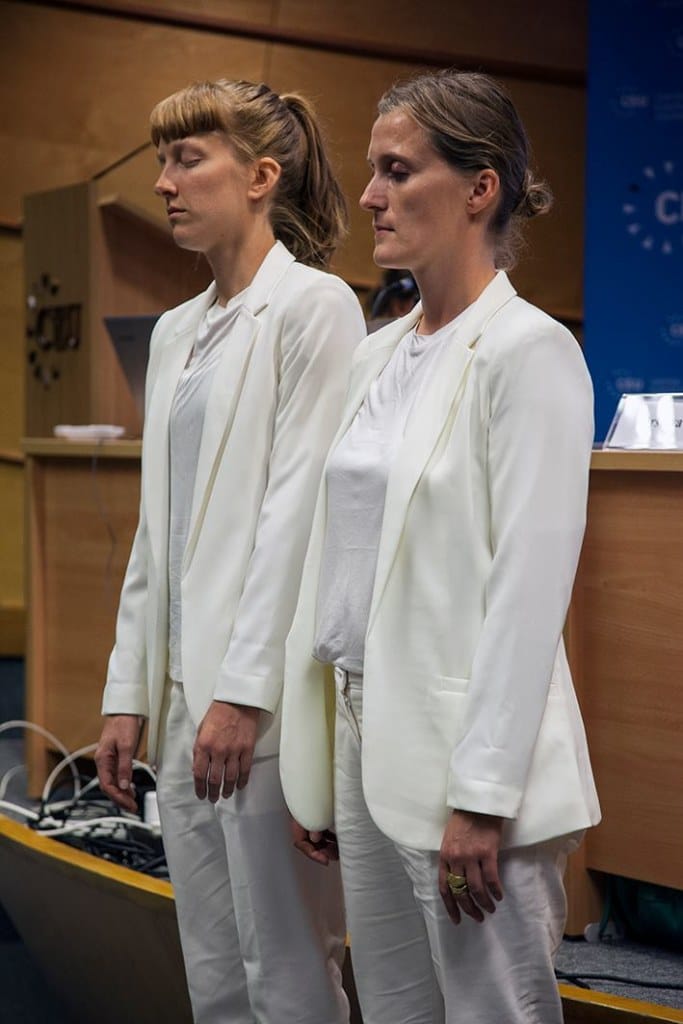
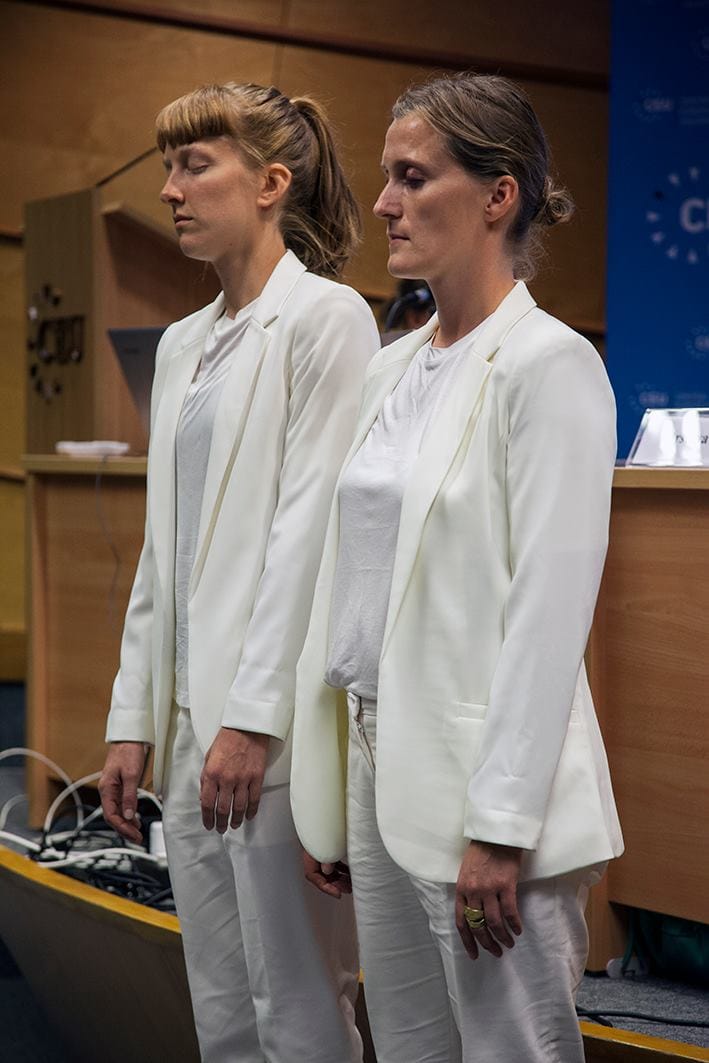
Ida-Elisabeth Larsen is a choreographer, dancer, and dance dramaturg, educated at SEAD in 2007. She holds a BA in Philosophy and Performance Design from Roskilde University, as well as an MA in Ecology and Contemporary Performance from Teak – University of the Arts Helsinki. She is an artistic director and active member of the art project Institute of Interconnected Realities (2015–), the choreographic duo two-women-machine-show, and the artist collective RISK. Her practice revolves around the significance of place, regenerative processes, and how these can be used to rethink choreography and its dominant structures.
Marie-Louise Stentebjerg is a dancer, choreographer, and mother of three, and since 2021 has been based on the island of Møn, living in a collective with both artistic and regenerative visions for a connected life. She is one of two artistic directors of the art project Institute of Interconnected Realities (2015–) and is also active in the choreographic duo two-women-machine-show (2011–). Central to her work is a focus on the multifaceted, the plural, and the not-yet-known, and on developing practices that regenerate the performer, transcend the spectator and participant, and engage the surrounding world—pushing beyond the boundaries of what she already knows.